

A New Dynamite
LLMs improve how we store information, but not our judgment

Alfred Nobel named his invention after the Greek word for power. He changed the name on the patent from “Nobel’s Safety Blasting Powder” to “Dynamite”. Yes, it improved the power of its predecessor, black powder, but did it enhance judgment? Safety was still left to the engineer… Maybe that’s why he changed the name.
A new dynamite has entered the world. Large Language Models (LLMs) improve how we access and wield knowledge, but, like dynamite, it doesn’t improve knowing when to use it.
Grand Technologies discusses how sweeping tech impacts our daily lives. Today observes technology threatening learning. LLMs are a landmark upgrade to knowledge infrastructure: the systems which store information to educate us.
“From gold rushes to guerrilla wars, dynamite’s dual legacy is one of construction and destruction.” - Christopher Klein
For nearly a thousand years, the world relied on imprecise black powder until dynamite arrived. Introduced in the 1860s, dynamite-driven engineering quickly became indispensable for civil engineering, mining, but also weaponry.

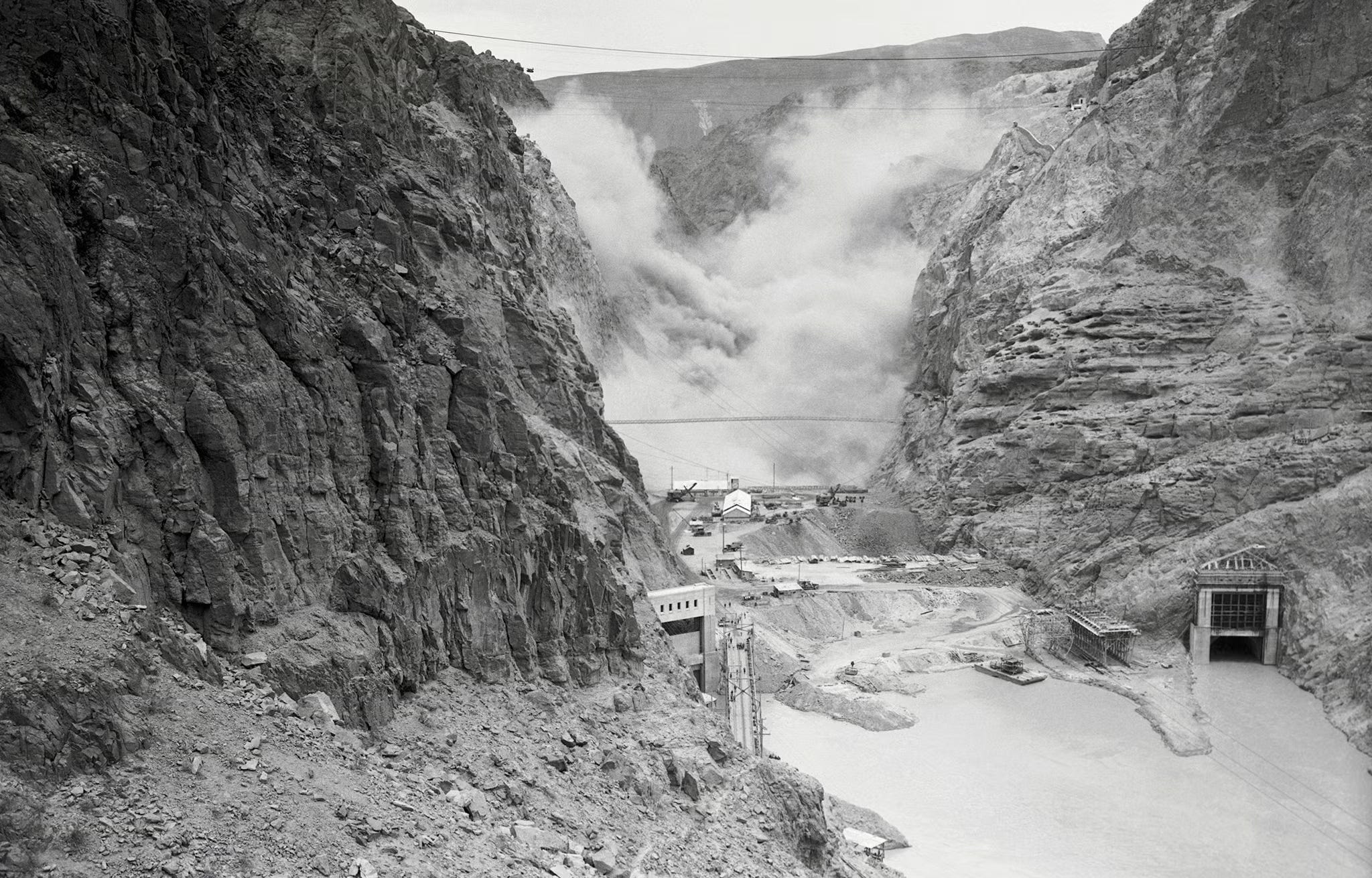
Famous engineering projects, like the Hoover Dam, would not be possible without dynamite’s ability to blast through larger amounts of rock more accurately. Henry Petroski, a professor of civil engineering and history at Duke University tells Popular Mechanics that “its introduction coincided with a lot of the railroads being pushed through uncharted territory, and they needed to get through large mountains,” and argues that “it was much more efficient than going up and down, and the dynamite was essential in blasting tunnels.”1
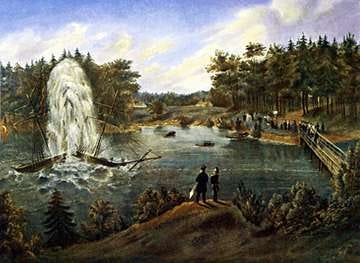
Not only an instrument for engineering and mining, dynamite improved high explosives at war. Only three years after entering production, dynamite was used by fighters in the 1870 Franco-Prussian War and then anarchists wielded dynamite to destroy public monuments during the subsequent Paris Commune of 1871. Its stability and portability made it easier for attackers to breach defenses.
A New Dynamite to Knowledge
Dynamite built and destroyed physical things; LLMs stand to do the same with how we think. For generations, grasping new knowledge got easier. Over thousands of years, technological leaps upgraded knowledge infrastructure that improved our access to information: language improved, the printing press spread, libraries grew, and digital networks and databases went online.
Each advancement reduced the friction to manage information. Reducing that time managing the information naturally trades off working in that information: lines of text, code, and pixel. Spending less time in the information risks losing our grasp over concepts.
The Dual Legacy of LLMs begins
The innovations of dynamite and LLMs are both amoral, not inherently “good or bad”. How the use of this power and technology is judged determines that. So, a dual legacy originates soon after.
dynamis translates to power in Greek (δύναμις),
tekhnē (τέχνη) translates to “art, skill, craft in work; method, system, an art, a system or method of making or doing.”
Neither word carries moral charge.
Today, LLMs revolutionize knowledge infrastructure, marking the most dramatic reduction in the friction to learning— but also present the greatest risk to intellectual development.
Over the last two decades, the growing popularity of “data-driven insights” —first from AI/ML algorithms but especially since the advent of LLMs— marks an inflection point in knowledge infrastructure. Humans have been abstracted so far from consuming and producing content that these steps are collapsed into one single “check”.
The analyst once read, synthesized, and reasoned. Now the analyst prompts an LLM to read, synthesize, and reason— then check what it’s done.
Ceding that control bears risk.
In the good, dynamite revolutionized civil engineering. LLMs stand to engineer together disparate knowledge that humans cannot. For example, a tech entrepreneur reduced the cancer in his dog by 75% by sequencing its DNA for $3k and navigated the research pipeline on a $20/month ChatGPT subscription.2
I’m convinced a solo founder will come along and make a billion-dollar unicorn. Their creation will definitely command an army of agents, but it will not inherently create some good.
In the bad, many pacifists historicize Alfred Nobel as “the Merchant of Death” with how widely dynamite was used in war. Can LLMs kill cognition? The same tools that teach and destroy learning in schools, jobs, and in life.
Abstracting knowledge management risks losing control over our own ability to access information ourselves. When we outsource how we access thought, we risk losing access to those thoughts themselves.
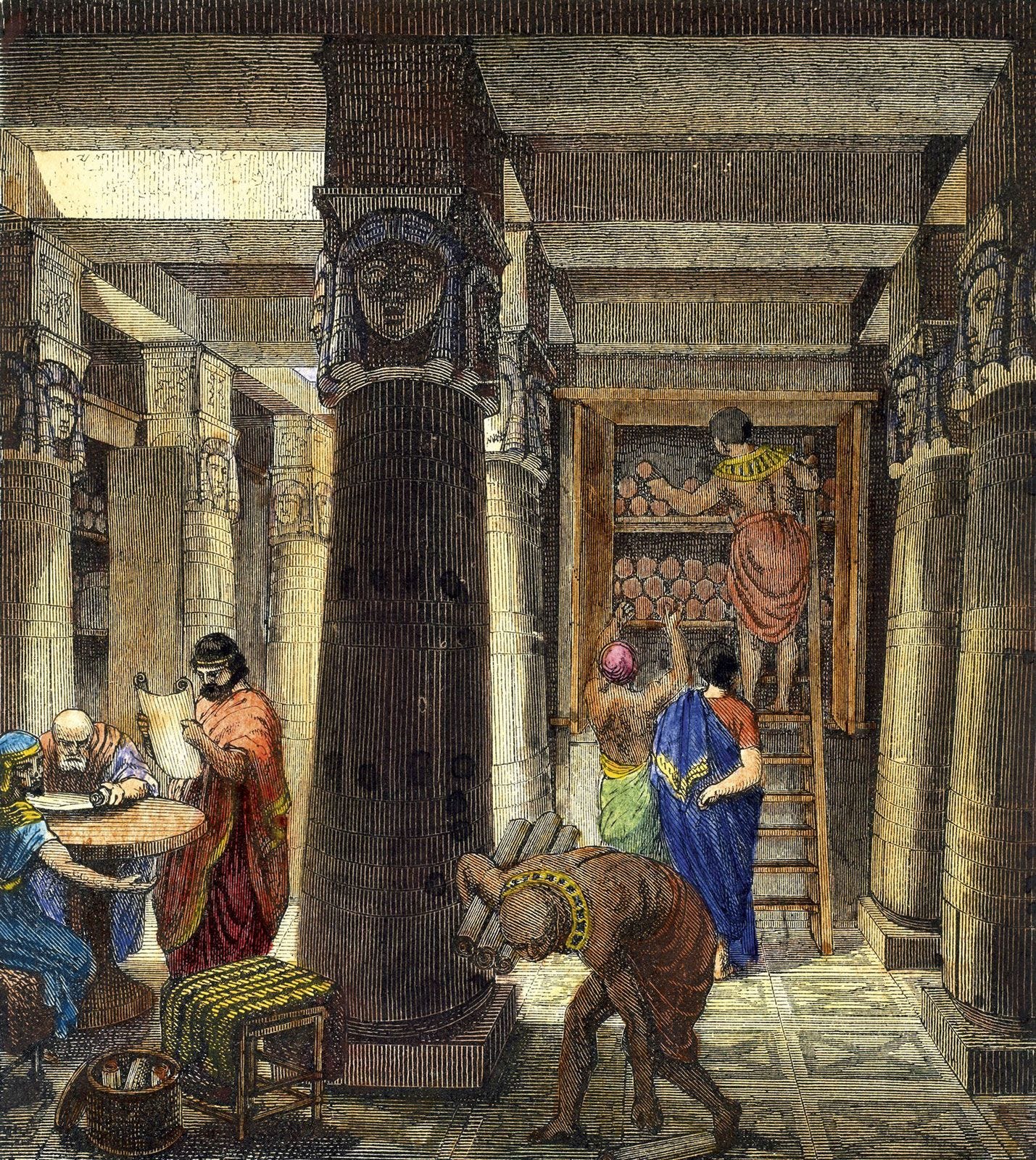
When the Library of Alexandria burnt down, its value as a central repository was lost. What happens if LLMs vanish?
We offer no explanation as to why these architectures seem to work; we attribute their success, as all else, to divine benevolence. “GLU Variants Improve Transformer” -- Noam Shazeer
We once wrote papers, pushed code, and drove ourselves; now we can “one-shot” that same work by immediately producing deep research, hacking together a working demo, or asking for a Waymo to take us straight to the airport.
Automate only the skills you’re willing to lose. - Gurwinder
So I drafted this in an email exchange to force me to research, think, and write slower. I can defend the lack of citations this time around. Weird grammar, awkward syntax, and janky flow will soon be be features of artisanal research, not bugs. Intentionally creating a space away from algorithms prevents encroaching upon my own thinking.
That luxury of slowness —to think and process the world at a pace that matches our own cognition— is unaffordable in competitive environments like work and warfare. We will naturally use every tool that enhances our thinking, to maximize our gain and minimize our losses.
In work, the massive leaps in knowledge management stand to benefit the individuals who wield LLMs correctly: playing secretary, automating routines, or testing insights. In warfare, Project Maven is an innovation to the knowledge management of intelligence.3 It allowed the Western forces to start the War in Iran by striking over 900 targets in less than 24 hours.
Learning will look a whole lot different in a decade. But what about leadership?
A computer can never be held accountable, therefore a computer must never make a management decision. Thus, it’s important for those who wield its immense power to know what they use it for. - 1979 Internal IBM training Manual
Applying LLMs to our daily lives—removing us from the loop of our decisions—holds up a mirror to our own morality. Most of it is innocuous; some of it is for the good of others; and some of it for the acts of evil. The tool itself is at its core amoral, but it all boils down to how humans use it.
Once men turned their thinking over to machines in the hope that this would set them free. But that only permitted other men with machines to enslave them.” ― Frank Herbert, Dune
Today’s cognitive capabilities are unmatched thanks to advances in knowledge management. Our brains cannot keep up. The world requires more restraint from its leaders than ever. A new modern Marcus Aurelius needs to emerge as Trump exposed how powerful4 a unitary American presidency can be.
“Yeah,” Trump grunted inelegantly. “There is one thing. My own morality. My own mind. It’s the only thing that can stop me.” He continued, “I don’t need international law.”5
Morgan, Kate. “How Dynamite Shaped the World.” Popular Mechanics, 26 May 2020, https://www.popularmechanics.com/science/a32447280/history-dynamite/. Accessed 25 Mar. 2026.
“Tech Pro Uses ChatGPT to Create Cancer Vaccine for His Dog and ‘Best Mate.’” People, 18 Mar. 2026, https://people.com/tech-pro-uses-chatgpt-to-create-cancer-vaccine-for-his-dog-and-best-mate-11928192. Accessed 25 Mar. 2026.
Manson, Katrina. “AI Warfare Becomes Real for US Military With Project Maven.” Bloomberg, 28 Feb. 2024, https://www.bloomberg.com/features/2024-ai-warfare-project-maven/. Accessed 25 Mar. 2026.
It’s worth noting that I don’t believe that seeking power outright is an immature act; power increases control and reduces stress (Great SBS Prof interview here about it). For example, getting a job gives us economic power. But, as your power on the world increases, your impact on others naturally follows.
“Trump Interview: Full Transcript.” The New York Times, 8 Jan. 2026, https://www.nytimes.com/2026/01/08/us/politics/trump-interview-transcript.html. Accessed 25 Mar. 2026.