

Iran goes analog to neutralize Silicon Valley (II)
Moving fast did not break Iran

Vice President Vance left negotiations in Pakistan without an agreement to end the war with Iran. The Strait remains contested. In hindsight, the terms of the ceasefire looked like a plea to return to the status quo before the war began. Now, U.S. Navy special forces have deployed to the southern coast and a potential invasion by American troops hangs in the balance. This is far from victory.
The Iran war teaches a bitter lesson in failing to win against a weaker adversary that has existed for decades: funding terrorism, seeking nuclear weapons, and building up an entire anti-American ideological regime.1 In response, our leaders relied on policies like the sticks of sanctions and carrots of nuclear agreements, but they’ve stopped short of such sweeping strikes that spark war.
Grand Technologies observes how hyped technology can impact our lives. Last post provided a perspective on how technology from Silicon Valley made a strike more appealing. Silicon Valley changed warfare by compressing operational planning and giving our leaders a god’s eye view. Today discusses Iran’s response in face of that digital advantage.
Even though the United States wields more digital power, Iran neutralized it by shifting the contest into the lower-tech analog domain where it matters less: decentralizing its domestic power to prevent insurgencies and controlling the Strait of Hormuz to wield global economic control.
I. Decentralizing Domestic Power
Iran politically structured itself to survive how the West could kill off its leadership to create a power vacuum; democracy distributes power to citizens and is a luxury not afforded to the daily Iranian.
Iranian Political Scientist Saeid Golkar is an expert on the authoritarian regime, “for years, Iranians have endured cycles of mass arrests, torture, executions, and deadly crackdowns on protests. Between January 8 and 9, the regime killed thousands of its own citizens for taking to the streets and demanding change. This is not an authoritarian state that sometimes oversteps, but a modern security autocracy that uses fear as a core tool of governance. And a regime that normalizes mass violence should not be treated as a legitimate political authority.”2
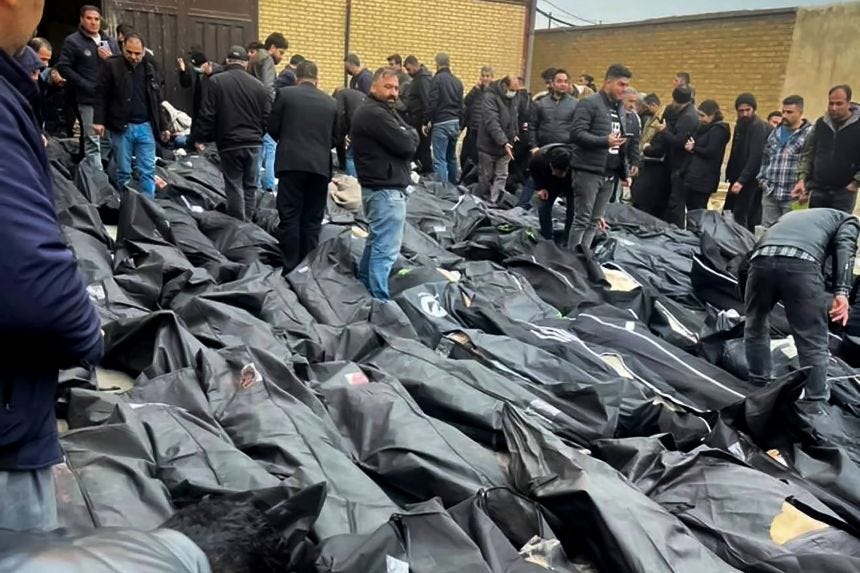
To retain its power, Iran governs its people on coercion, rooted in systematic repression in a tangled web of military commanders that run the state by force.
Iran’s foreign minister has described its leadership as structured by “Decentralized Mosaic Defense”: a doctrine that distributes its military into an estimated 31 regional commands, each capable of responding alone with full capabilities.3 Designed to retain military control without any single leader, Iran has negated a digital advantage that could enable any insurgency, short of the West invading with boots on the ground.
No internet prevents a revolution to rise in the digital world. Since the war broke out, Iran shutdown the wider internet for its 92 million citizens— roughly 1% of normal traffic remains accessible.4 The regime’s leaders maintain their own intranet, a digital iron curtain heavily monitored.
This all lowers the chance of a power vacuum arising even as drones circle the skies to kill leaders at a moment’s notice. The West’s decapitation strategy—the targeted killing of Iranian leadership— failed to force terms in Pakistan. No wonder the United States keeps ground invasion on the table. Iranian commanders remain in power and are under no hurry to surrender their arms to the very citizens they’ve shot, tortured, and silenced for decades.
II. Chokepoint Geography
The second analog advantage: Iran’s geographic fortune. The country doesn’t need to match the West’s technological capabilities when it controls a crucial bottleneck to the world’s gas and oil production: the Strait of Hormuz in the Persian Gulf.
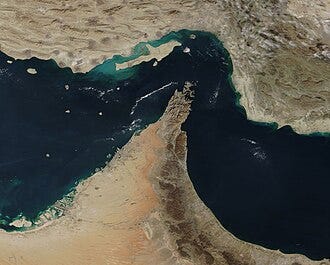
Iran is the second-largest country in the region. Its regional power extends to controlling the Persian Gulf, home to 31% of global crude oil production. The Strait is two miles wide at its narrowest point and at peak flow, 20 million barrels a day of crude and refined oil flow through it. That’s roughly equivalent to both the United States and Canada’s combined daily production.5 All bypass pipelines in Saudia, UAE, to Gulf of Oman are within Iranian weapons and have been hit.
Iran’s proximity to the Strait means it doesn’t need the best digital technology. Sharing over 1,800km along the Persian Gulf, it only needs weapons that are good enough to threaten the oil that flows from the region.
Low-cost Shahed drones cost between $20,000 to $80,000, a tenth of the Western missiles that cost contractors like Lockheed Martin millions to make. And Iran built a reserve of an estimated 2,000-6,000 naval mines—the largest stockpile in the region—over decades from the various sources: Chinese, Soviet-era, Russian and their own makeshift ones.6 Less than $25,000, each mine can disable a billion-dollar warship.
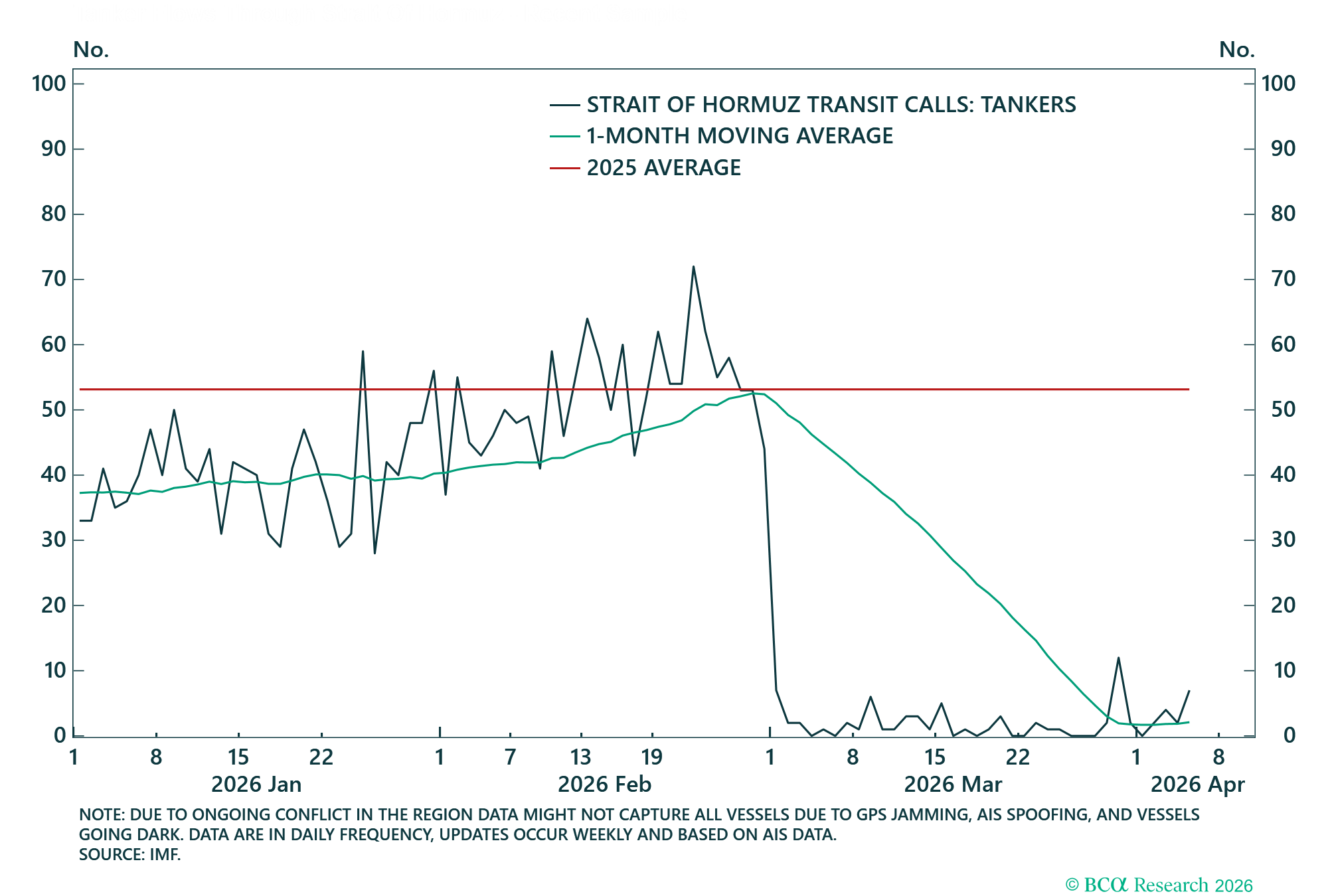
The low-tech drones and mines prove good enough. Iran has attacked at least 21 ships and made transit uninsurable for underwriters.7 On March 11, Iran began laying mines. Within weeks, legitimate shipping dropped 95%. 140 vessels a day dropped to as few as five.
The consequences land on everyone. Thousands have died. The average price of gas has soared past $4 a gallon. 54% of Americans oppose the war.8 There’s been “no rally around the flag effect” that boosts a president’s favorability. And whatever comes from future negotiations, the war remains unfavorable.
We cannot live in a world where a nuclear power threatens to destroy entire civilization and wipe out its 90 million citizens— the regime is horrible, but its people are not.
Power asymmetry does not let our leaders ignore strategy; tools are only good as those who wield it. Rapid innovation has kept the United States ahead against its adversaries since WW2, but this latest war testifies that gap does not guarantee success.
“Iran’s Threat to the United States and U.S. Interests,” Congressional Research Service, R47321. https://www.congress.gov/crs-product/R47321
"What Regime Change Could Mean for Iran," Global Affairs. https://globalaffairs.org/commentary/analysis/what-regime-change-could-mean-iran
“IntelBrief: Decentralized Mosaic Defense,” The Soufan Center, March 9, 2026. https://thesoufancenter.org/intelbrief-2026-march-9a/
"Iran's Regime Has Shut Down the Internet in the Middle of War, Placing Civilians in the Crosshairs," The Conversation, 2026. https://theconversation.com/irans-regime-has-shut-down-the-internet-in-the-middle-of-war-placing-civilians-in-the-crosshairs-277619
EIA, "World Oil Transit Chokepoints"; International Maritime Organization (IMO); U.S. Navy Naval Central Command (NAVCEN).
Office of Naval Intelligence, “Iranian Naval Forces: A Tale of Two Navies,” 2017; Anthony Cordesman, CSIS; Scott C. Truver, “Mines and Underwater IEDs in U.S. Ports and Waterways,” Naval War College Review, 2012; Samo Burja, “The Iran Energy Crisis,” Bismarck Analysis / Citrini Research, March 12, 2026.
"Iran Lays Mines in Strait of Hormuz," CNN, March 11, 2026. https://www.cnn.com/2026/03/11/middleeast/iran-mine-strait-of-hormuz-intl
Nate Silver and Eli McKown-Dawson, "How Popular Is the Iran War?" Silver Bulletin, April 2026.