

Do you care that I wrote this?
Writing is evolving like woodworking.

Recent Posts:
* Birthday Update: Summer in San Fran, Fall in the UK
* How Silicon Valley’s tech shaped the Iran War (I and II)
Do you want to lend your view about the power of tech in our daily lives? Outside of geopolitics, I’ve been thinking about whether tech empowers goals, keeps us single, and helps us try new things.
Writing is evolving like woodworking.

Authors can write with a chatbot like a contractor props up entire housing communities. The software are like power tools that craft entire arguments, but they risk making the big old house of an essay looking all the same.
And now a schism exists. Like artisanal wood workers, an author that writes by hand holds the craft itself sacred. To the purists, it’s this way of expressing themselves through the work itself, even at the expense of productivity.
I write today an ode to the act of writing. LLMs fundamentally changed it. Creating words and arguments will never be the same. Since ChatGPT released in November 2022, AI has plagued the world of writing to many of its purist authors: warping each stage of drafting, improving, and publishing arguments.
Regardless of your views on the machines, we must all be careful— for the sake of how we express ourselves in work and the world.
AI has infested the written word:
In February, OpenAI bragged that ChatGPT reached 900million weekly active users;1 some 40% of which use it for writing and editing2.
In the workforce: 87% of marketers use it,3 around 70% of newsroom staffers4, 54% of legal professionals have AI help them draft correspondences.5
An April 2025 study found 74.2% of new web pages had detectable AI content (900k+ websites scraped).6
Students lean on AI from drafting all the way up to just letting them write entirely. College Board published a survey that reported 84% of high school students using GenAI. College faculty reported 74% of their students are using AI to write essays and papers.7
Walk down the street, read your favorite newsletter, the news— a fake brain probably helped write it. Poor detection and the nature of self-reporting likely underestimates these numbers.8
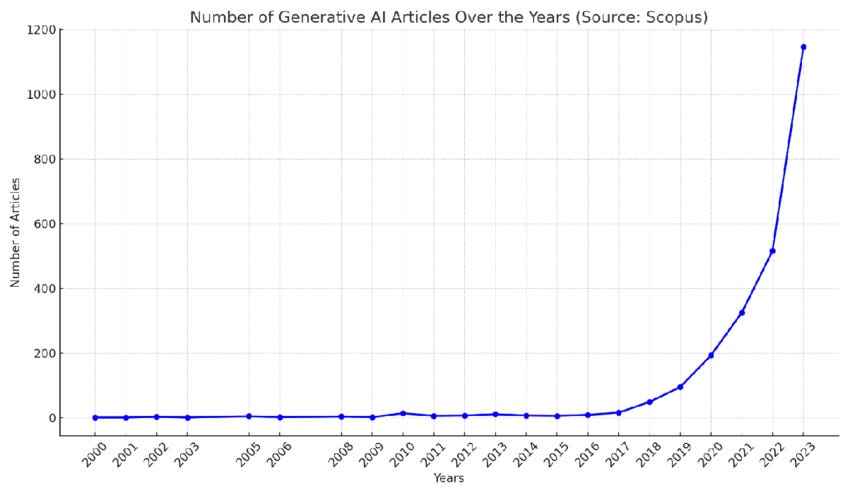
Scholars of tech history agree now that a new form of writing is here to stay. We will all be expected to write more in less time.9
Reading anything before ChatGPT’s release in November 2022 will be relatively more sterile than what has followed. The lazy authors since then make their readers suffer.
These LLMs write so obnoxiously similar. Yes, the most recent models use the M dash less—whose reputation is forever tarnished—but other patterns remain metastasized into plenty of different bodies of text. For starters, there’s that short staccato phrasing. Everything matters. It’s got this consistent cadence. And don’t forget about a forceful tone. Because it’s all so important. Then, the piece will arc into some stupid crescendo for a sweeping conclusion. Because that’s what LLMs do best— they dramatize.
Well, isn’t this just the latest way in which technology abstracts our physical world?
Think of how we get places: we walked, then rode horses and carriages, and then drove cars.
Or, software engineering used to punch binary code into cards on massive machines to run calculations overnight. Now software can be built from writing in plain English thanks to natural language processing.
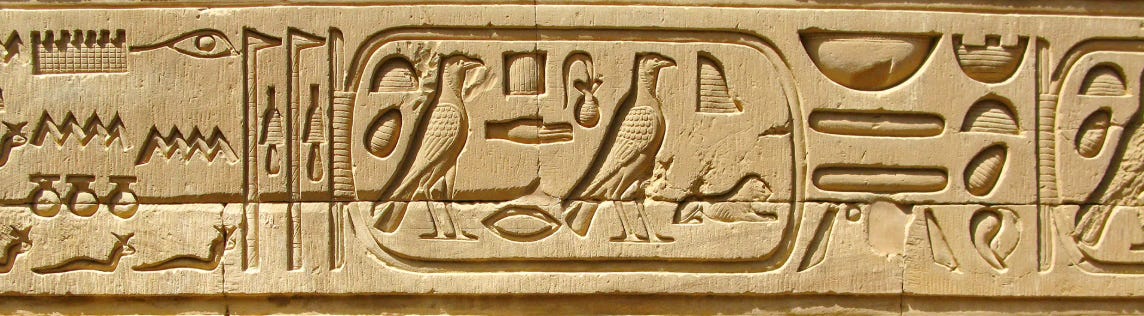
So this time, it’s technology lowering the friction to communicate. We once carved hieroglyphs into caves; ChatGPT and I could write an entire 80,000 word novel in an afternoon. Why is that evolution so bad? What is lost?
You must express yourself.
Say I relied on every a tool trained on billions of written words from others, are the ones I create really mine? Were creative writing to disappear—in all its human flair and mistakes—it would limit the self-expression that shapes our work and personal lives. I should learn the M dash.
Losing ownership over creative writing hurts learning and owning the work.10 Analytical jobs expect GenAI for everything: draft quicker analyses, respond to emails faster, and automate sloppy routines like outreach.
Every workday “feels” more intense, but I still ask what is lost?11 The more we automate, the less my individual contributions uniquely matter. When I lose writing, I don’t read, nor learn, as as closely. When I punt the responsibility over the words, I delegate away dealing with the material and people behind it.
Frauds always get found out and there are no shortcuts to expertise. I fell victim to this in research. I listened to some tech bro online and experimented with drafting a whole AI research workflow. I let it write an entire report that allegedly rivaled “an army of McKinsey consultants”. Even though I spent time refining it, I didn’t write it nor understood the material. So when I strutted in with my fancy deliverable ahead of a deadline— I fell completely on my face. I could not explain anything “below the iceberg”. I apologized and said I was “way over my skis”. So I went “back to the drawing board”. plz fix. thx.
In our personal life, I beg that you remain creative wherever possible. Relying on a chatbot to write can quickly become a crutch. Delegating away voice strips me of my creative soul. I want typos. orrrr, maybe ur a lowercase texter at all times! as a tangent, i do take openai’s sam altman’s ardent commitment to writing everything lowercase as slightly too much. look here; he’s messaging leaders of trillion dollar companies as he gets kicked off his.


If we prioritize connection, then 80-95% of message conversation should probably be a call. Written words still matter, for their voice reflects tone, energy, interest, and mood.
The worst words filter through a chatbot. The best ones emerge over a handwritten letter.
As chatbots improved, I relied on them less to write. That’s my choice. It’s tied to my goal of the words to hone my voice and amplify my insights. So do you care that I wrote this?
Aaron Chatterji, Tom Cunningham, David J. Deming, et al., "How People Are Using ChatGPT," NBER Working Paper No. 34255, National Bureau of Economic Research / OpenAI, September 15, 2025. Link
Erica Santiago, “The HubSpot Blog’s AI Trends for Marketers Report,” HubSpot Blog, June 11, 2025. Link
MyCase / American Bar Association Law Practice Division, “The Legal Industry Report 2025,” ABA Law Technology Today, May 6, 2025. Link
Ryan Law, Xibeijia Guan, and Tim Soulo, "74% of New Webpages Include AI Content (Study of 900k Pages)," Ahrefs Blog, May 19, 2025. Link
College Board Communications, “New College Board Research: Faculty Express Near-Universal Concern That Student AI Use Undermines Original Writing and Critical Thinking,” College Board Newsroom, February 25, 2026. Link
Andrej Karpathy (@karpathy), “A number of people are talking about implications of AI to schools... You will never be able to detect the use of AI in homework. Full stop... You have to assume that any work done outside classroom has used AI,” X (Twitter), 2025. Link